
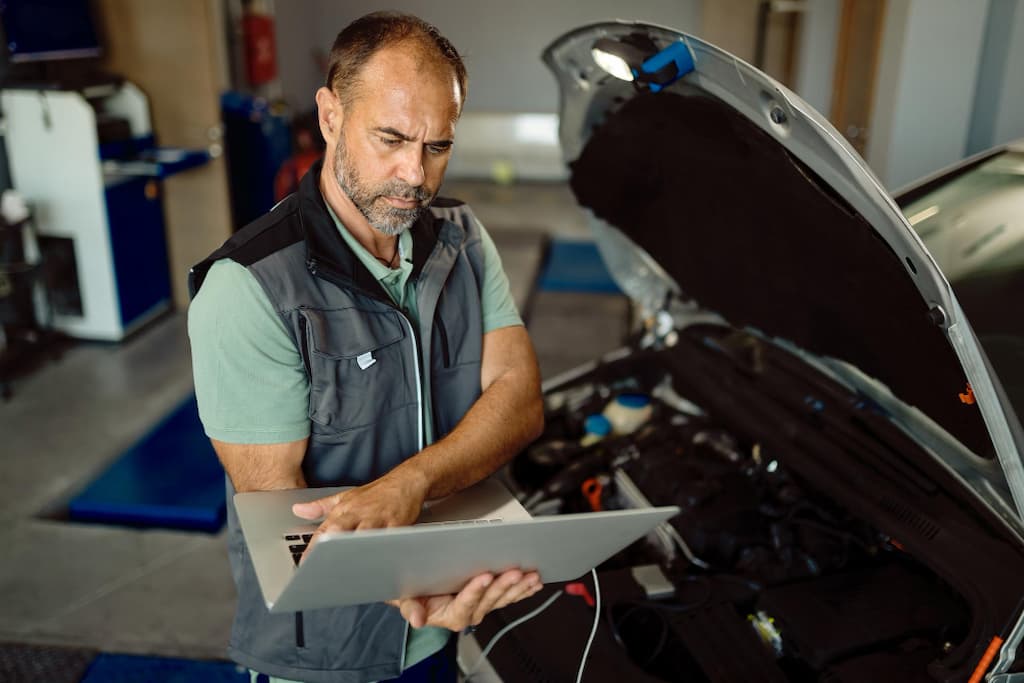
The electric car ITV still raises many questions among drivers who have opted for more sustainable mobility. Is it the same as for a gasoline car? What exactly do they inspect? Do electric cars pass the ITV without issues?
If you’ve ever wondered about this, you’re in the right place.
In this article from Activacar, as a company specializing in charging point installation, we explain, in a clear and practical way, how the ITV works for electric vehicles, what differences exist compared to traditional cars, and what you should keep in mind to pass it with confidence.
The short answer is yes, but with some nuances.
Electric cars do go through the ITV, although the process is adapted to their technology. The inspection frequency is the same as for a conventional vehicle:
First ITV: at 4 years
After that: every 2 years until the vehicle is 10 years old
From 10 years onward: annually
What changes is not when the ITV is carried out, but what is inspected. Since they don’t have a combustion engine, exhaust system, or polluting emissions, some tests are no longer required while others become more important.
What Is Checked During the ITV for an Electric Car?
In general, during the ITV for electric vehicles, the following aspects are checked:
Overall condition and vehicle safety
There are no differences here. During the ITV, the basic elements that ensure safety are checked:
Brakes
Steering
Suspension
Tyres
Lights and signaling
Seat belts and restraint systems
It’s exactly the same as in any other car.
Electrical system and battery
This is one of the key points in the ITV for electric cars. Technicians check:
Proper insulation of the electrical system
The visible condition of cables and connections
The absence of leaks, damage, or tampering
Range and the internal condition of the battery are not measured, but the entire system must be safe.
No emissions test
Here comes one of the big advantages.
Since they do not emit polluting gases, electric cars do not undergo an emissions test, which removes one of the main reasons for failing in diesel and gasoline vehicles.
Differences Between the ITV for Electric Cars and Hybrid Vehicles
Although they are often confused, they are not the same:
Electric vehicle: runs only on electricity. There are no emissions or exhaust system.
Hybrid vehicle: combines an electric motor and a combustion engine.
In hybrid vehicles, the ITV does include an inspection of the combustion engine and, in some cases, emissions testing. In contrast, for a 100% electric car, the process is simpler and faster.
Practical Advantages of the ITV for Electric Cars
Passing the ITV with an electric car is usually easier for several reasons:
Fewer mechanical components that can fail
No clutch, oil, or exhaust system
Less wear on the braking system thanks to regenerative braking
It’s like comparing an electric bicycle to a classic motorcycle: fewer parts, less maintenance, and fewer unexpected issues.
Useful Tips to Prepare Your Electric Car for the ITV
Before going to the inspection, it’s a good idea to check a few basic points:
Check lights and signaling
Check tyre pressure and condition
Make sure there are no warning lights illuminated
Check that the charging cable and the port are in good condition
One important detail: bring the car with sufficient battery charge, as in some cases it is necessary to switch the vehicle on during the inspection.
Why are more and more drivers choosing electric cars?
In addition to a simpler ITV, there are clear reasons:
Lower maintenance costs
Savings on fuel
Smoother and quieter driving
Commitment to the environment
Electric mobility is no longer the future — it’s the present. And the sooner your charging infrastructure adapts, the better the experience will be. It also offers advantages such as installing a charging point in your community garage, which is far more convenient than having to go refuel at a gas station.
Conclusion: The ITV for Electric Cars Shouldn’t Worry You
If you had any doubts, you can relax: electric cars pass the ITV without complications, with fewer tests and a lower risk of failing than traditional vehicles.
And if you want to take the next step and improve your daily life with an efficient charging solution, at Activacar we help you make it easy, safe, and tailored to your space.
Contact us and request information with no obligation.
Frequently Asked Questions About the ITV for Electric Cars
Is the ITV for electric cars cheaper?
No, the price is usually similar, although in some regions it may be slightly lower since the emissions test is not required.
Do electric cars pass the ITV even if they have less range?
Yes. Driving range is not evaluated during the technical inspection.
How often do electric cars have to undergo the ITV?
The inspection frequency is the same as for combustion cars: the first at 4 years, then every 2 years, and annually after that.
What happens if the electrical system has a fault?
If it affects safety, the ITV result may be unfavorable. That’s why it’s important to keep the system in good condition.
Do electric cars go through the ITV faster?
Usually yes, because there are fewer tests to carry out.



 EN
EN  ES
ES