If you own an electric vehicle or are thinking about buying one, you have probably asked yourself this question: Is it good to charge your car everyday?
Yes, Charging an electric car every day is generally recommended., especially if you use the vehicle daily and keep the battery at intermediate levels, usually between 20 % and 80 %. This practice helps to conserve the battery, prevents deep discharges, and ensures that you always have power available.
The key is not whether to charge it every day or not, but rather How do you manage the load?.
In this Activacar article, we'll explain what manufacturers recommend and the best practices for daily use.
Best practices for charging an electric car every day
If you use the vehicle daily, these recommendations help to improve the battery's lifespan and optimise charging:
Keep the battery charge level between 20 % and 80 %
For everyday use, this is the most recommended range. It reduces battery stress and improves its conservation.
Save 100 % for long journeys
It is not necessary to fully charge the battery every day. The 100 % is usually most useful before long journeys.
Avoid frequent deep discharges
Trying not to let the % fall below 10–20 on a regular basis helps to ensure a slower rate of degradation.
Prioritise slow or semi-fast charging
Home charging is usually more suitable for everyday use than relying continuously on rapid chargers.
Take advantage of off-peak rates
Charging overnight allows you to save money and have the vehicle ready for the next day.
Is it good to charge the car every day, or can it damage the battery?
Yes, generally It's good to charge the car every day, and to do it frequently when you use the vehicle daily.
Current batteries are designed to withstand thousands of charging cycles, so plugging in the car regularly isn't an issue if done correctly.
It is also important to understand what a charge cycle is. A full cycle does not mean plugging it in just once, but rather using up 100 % of the battery’s capacity accumulated over several charges. For example, if you use 40 % today and another 60 % tomorrow, that counts as a full cycle.
Lithium-ion batteries, which are the most common in electric cars, work best when kept at intermediate levels, typically between The 20 % and 80 %.
This helps to:
- Conserve the battery better
- avoid deep discharges
- always have sufficient autonomy
- reduce long-term battery stress
In other words: Frequent small charges are better than constantly charging from 0 % to 100 %.
It's a bit like your mobile phone. You don't need to wait for it to run out of battery before charging it. The same applies to electric cars.
Is it good to charge the car every day if I only make short trips?
In many cases, yes. In fact, it can be the most convenient and efficient way to use your electric car.
If you travel 30 or 40 km a day, you’ll use up approximately between 10 % and 20 % of battery power. By charging it every night, you’ll keep the battery level stable and avoid any worries.
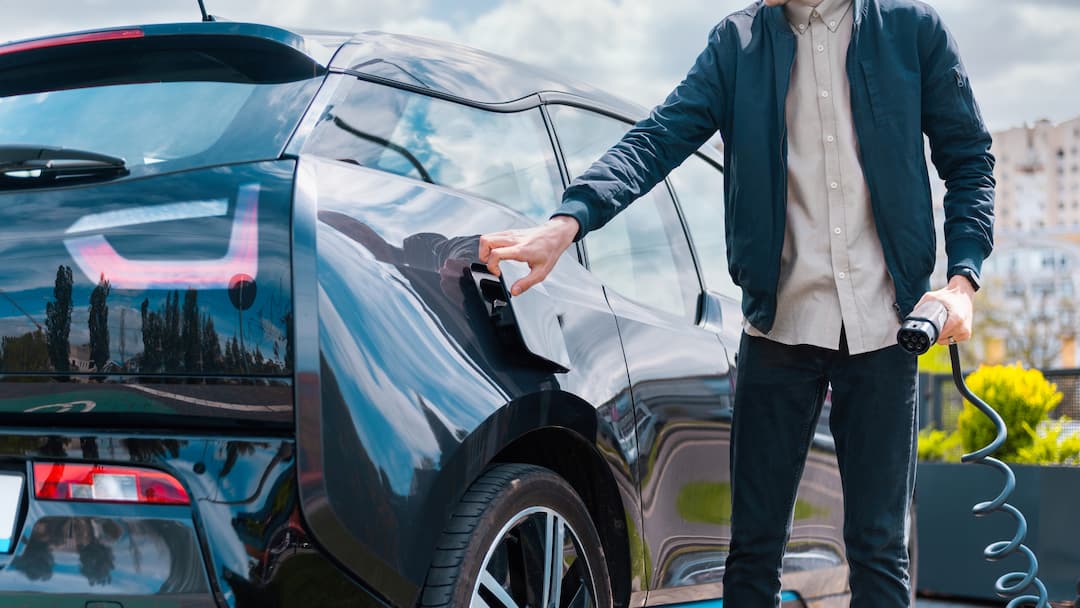
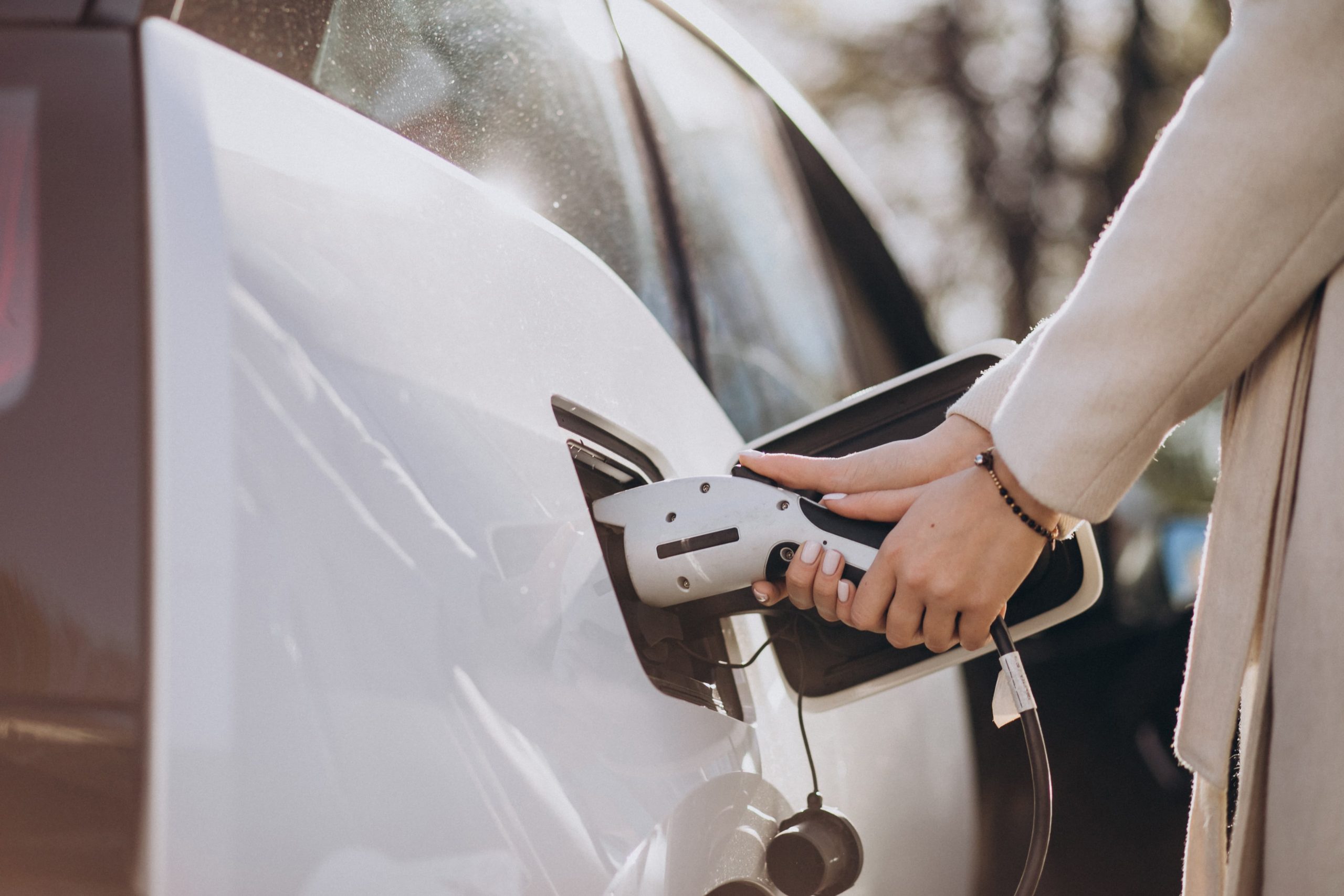
What's more, if you can carry out an installing a charging point, Charging your car at home is as simple as parking it. You literally plug it in when you arrive, and it's ready the next day.
How many times can an electric car be charged?
This is another frequently asked question. Today's batteries are usually designed to between 1,500 and 3,000 full charge cycles, depending on the manufacturer and model.
If we do the numbers, that can be translated into hundreds of thousands of kilometres.
For example, if a car has a range of 400 km and can withstand 2,000 complete cycles, we would be talking about a theoretical 800,000 km before significant degradation.
Now, in practice, batteries don't usually run out all at once. What happens is that over time they lose some capacity, just like any battery.
But that loss is usually progressive and moderate.
What happens if I leave my electric car charging overnight?
It's fine. Modern electric cars have Battery Management Systems (BMS) that control charging automatically.
When the battery reaches the programmed level, the system cuts off or regulates the energy input. This means the battery isn't being forced for hours.
Also, if you can have a Home electric car chargeryou can program charging times to take advantage of cheaper electricity rates at night.
It is comfortable, efficient and safe.
And can I charge every day in a communal garage?
Many users believe that daily charging is only viable in single-family homes, but this is not true.
Today it is totally possible install a charging point in a communal garage, in compliance with current regulations.
In this context, charging every day is also common practice. You come home from work, plug in your electric vehicle, and the next day it's ready to go. Just as if you lived in a detached house.
The key is to have a professional, secure installation that is tailored to your needs.
Is it advisable to always charge to 100%?
Not for everyday use.
Ideally, the battery should be kept between 20 % and 80 %. Charging it to 100 % on a regular basis may slightly accelerate degradation.
The 100 % is recommended for specific situations, such as long journeys.
Many manufacturers even allow you to limit the maximum charge percentage from the car's app. This means you can program it so that it does not exceed 80% automatically.
Is it the same with plug-in hybrid cars?
With plug-in hybrids, charging every day is even more recommended.
Its electric range is usually between 40 and 80 km, so charging it daily allows for maximum use of electric mode and reduced fuel consumption.
So, is it good to charge your electric car everyday?
Yes. Charging the electric car every day is a recommended practice provided it's done correctly.
These are the main advantages:
- It maintains the battery at optimal levels
- Avoid deep discharges
- Allows for constant available autonomy
- Improve energy efficiency
- Brings comfort to everyday life.
It's a new way of understanding mobility. More like charging an electronic device than going to a gas station.
When is it not advisable to charge an electric car every day?
Although daily charging is usually recommended, there are some situations where it's not necessary:
- If you use the vehicle very little
- If you're going to leave the car unused for several days
- If you usually keep the battery at around 100 %
In these cases, it may be more advisable to maintain an intermediate load.
Conclusion: comfort, efficiency, and peace of mind
In response to the question of whether It's good to charge the car every day It's simple: yes, as long as the load is managed well.
Current technology is ready for this. The important thing is to have a suitable, safe installation that is adapted to your home or community.
At Activacar, we help you take that step with professional charging solutions designed to make your transition to electric mobility comfortable, efficient, and sustainable.
Frequently asked questions about charging your car every day
Is it good to charge your car every day even if it's not empty?
Yes. Frequent partial charges are usually more advisable than fully discharging the battery.
Is it bad to charge an electric car to 100 % every day?
It doesn't pose a temporary problem, but doing so constantly can slightly accelerate battery degradation.
Is slow charging or fast charging better for everyday use?
For regular use, slow or semi-rapid charging is usually recommended.
Is it bad to leave the car charging all night?
No. Current systems automatically manage the load via the BMS.
A plug-in hybrid can also be charged daily.
Yes. In fact, it's usually recommended to take advantage of its electric range.