

Electric mobility is already a reality in Spain. We are seeing more and more electric and plug-in hybrid vehicles on our streets and highways. However, one of the most common questions before making the switch remains the same: how much does it cost to charge an electric car at a gas station. Is it expensive? Is it cheaper than refueling with petrol? Is it worth it compared to charging at home?
In this article, we answer all of those questions with indicative prices, real-life examples, and practical comparisons to help you make an informed decision.
How much does it cost to charge an electric car at a gas station?
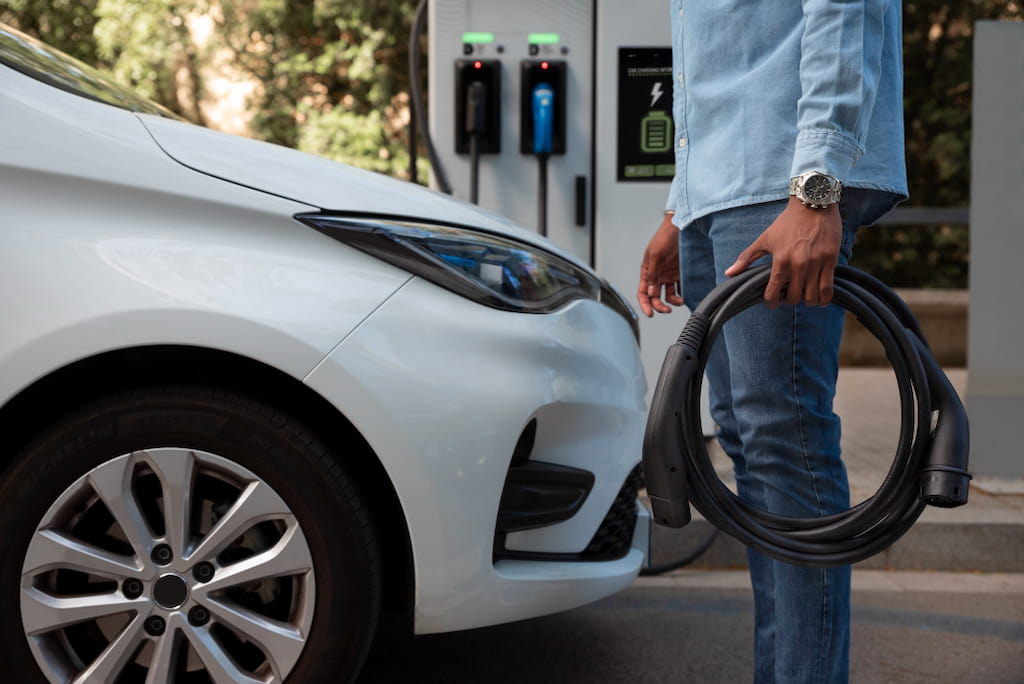
Charging an electric car at a gas station costs, on average, between €15 and €40 per charge, depending on the type of charger, its power, and the size of the vehicle’s battery. In terms of energy price, the cost is usually between €0.30 and €0.70 per kWh.
This is the clear benchmark most drivers use, as it allows for a quick comparison with other options such as charging at home. From here, the final price may vary depending on several factors you should be aware of.
The price of charging an electric car at a gas station depends on several factors. There is no single fixed rate, as each operator sets its prices based on the type of charger, its power, and its business model.
In general, charging an electric car at a gas station is more expensive than charging it at home, although it does offer a key advantage: speed, especially on long journeys.
Average price per kWh at gas stations
In Spain, typical prices usually fall within the following ranges:
- Slow or semi-fast charging (up to 22 kW): between €0.30 and €0.45 per kWh.
- Fast charging (50 kW): between €0.45 and €0.60 per kWh.
- Ultra-fast charging (100–350 kW): between €0.60 and €0.70 per kWh.
To put it into context, an electric car with a 50 kWh battery would have an approximate cost of:
- €15–22 with semi-fast charging, usually taking between 2 and 4 hours.
- €22–30 with fast charging, usually taking between 40 and 60 minutes.
- Up to €35–40 with ultra-fast charging, usually taking between 15 and 30 minutes.
What affects the cost of charging an electric vehicle?
When we want to know how much it costs to charge an electric car at a gas station, it is important to understand which factors directly affect the final price.
Charger type
It is not the same to charge during a quick stop as it is to make a long break. The higher the charger’s power, the faster the vehicle charges and the more expensive the kWh usually is.
Battery capacity
A small electric vehicle does not consume the same as an electric SUV. The larger the battery, the higher the total charging cost.
Operator and location
Stations located on highways or in high-traffic areas usually have higher prices than those in urban environments.
Time-based pricing
Some charging points do not charge only for the energy consumed, but also for the connection time, especially if a usage limit is exceeded.
Is it better to charge your car at home or at a gas station?
This is where many drivers see it clearly. Charging an electric car at home is as simple as charging your phone overnight and, in addition, much more economical.
- Home charging: between €0.10 and €0.20 per kWh (depending on your electricity tariff).
- Gas station: between €0.30 and €0.70 per kWh.
This means that a full charge at home can cost less than half as much as charging at a gas station. For this reason, most users rely on public charging stations only for long trips or occasional situations.
If you’re considering this option, you can learn about charging point installation, a convenient and cost-effective solution in the medium term.
Is it cost-effective to charge an electric car at a gas station?
Charging an electric car at a gas station can be cost-effective in specific situations, but it is not the most efficient or economical option for everyday use.
The reality is that charging your car at home is far more cost-effective. The cost per kWh is significantly lower, off-peak hours can be used, and convenience is greatly improved. In the medium and long term, the financial difference is noticeable.
Gas stations with electric charging points play a complementary role. They are useful as an occasional solution, but not as a primary charging system. They are designed for:
- Long road trips.
- Quick stops when there is no nearby alternative.
- Exceptional or emergency situations.
On a day-to-day basis, home charging is the most logical, economical, and sustainable option. That’s why most electric vehicle users only rely on gas stations occasionally, while carrying out the majority of their charging at home or in their garage.
What if I live in a homeowners’ association (apartment building)?
One of the most common questions is what happens if you don’t have a private garage. The good news is that installing a charging point in a shared residential garage is completely feasible.
Currently, regulations allow the installation by simply notifying the homeowners’ association, without the need for approval at a community meeting. This opens the door to more accessible and affordable electric mobility.
Therefore, if you live in a homeowners’ association and want to have a charger to charge your car at home, you only need to inform the community in advance about the installation.
Typical example of what it might cost you monthly
Imagine a driver who travels 1,000 km per month:
- Average consumption: 15 kWh / 100 km.
- Monthly energy consumption: 150 kWh.
Approximate cost
- At home: €20–25 per month.
- At a gas station: €45–90 per month.
The difference is clear, especially in the long term.
Conclusion: choosing where to charge makes the difference
Knowing how much it costs to charge an electric car at a gas station is key to planning your journeys and optimizing costs. Public charging stations offer speed and flexibility, but true cost-effectiveness comes with home charging.
If you’re thinking about switching to an electric vehicle or improving your charging system, at Activacar we help you find the most efficient, safe solution tailored to your home or community.
Frequent questions
How much does it cost to charge an electric car at a gas station?
Approximately, charging an electric car at a gas station costs between €15 and €40 per charge, with an average price of €0.30 to €0.70 per kWh, depending on the type of charger.
How much does it cost to recharge an electric car at a fast charging station?
At fast or ultra-fast chargers, the price usually ranges between €0.45 and €0.70 per kWh, making it more expensive than home charging.
Is it cheaper to charge an electric car at home or at a gas station?
Charging at home is much cheaper. The cost per kWh can be up to 60% lower than at a gas station, especially with off-peak electricity tariffs.
When is it worth using a gas station to charge an electric vehicle?
It is worthwhile for long trips, occasional journeys, or emergencies, but not as a primary charging system.
Is it worth installing your own charging point?
Yes. In the long term, it is the most cost-effective, convenient, and sustainable option for the daily use of an electric vehicle.



 EN
EN  ES
ES